
The U.S. market: opportunity and challenge for Asia-Pacific suppliers.
What it takes to win in America’s complex but rewarding industrial economy — backed by named sources, specific surveys, and real numbers.
The United States is in the middle of a manufacturing renaissance, and Asia-Pacific suppliers are at the center of it. But the rules for winning U.S. business changed faster than most companies caught up. Price still matters; it is no longer enough.
The Opportunity
Why Asia-Pacific suppliers are central to America’s next industrial cycle — and why the path in is harder than it looks.
Korean semiconductor and EV battery investments alone exceed $100 billion in committed U.S. projects. Japanese and Taiwanese suppliers are following their customers into new American factories. Across consumer goods, industrial manufacturing, medical devices, and energy infrastructure, U.S. buyers are actively looking for credible Asia-Pacific suppliers that can serve American demand at American expectations.
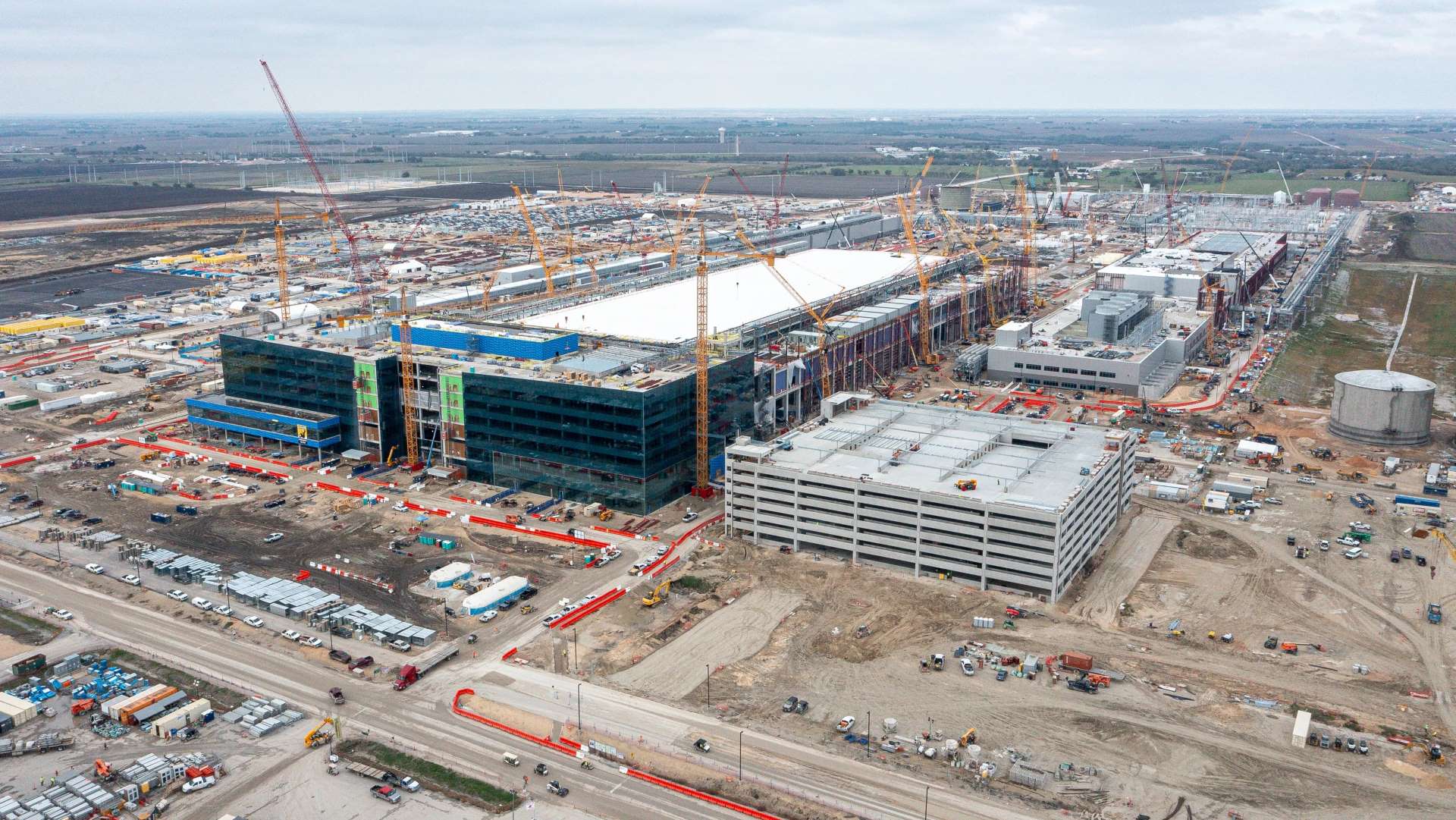
The companies making headlines, however, are conglomerates with armies of lawyers, lobbyists, and government liaisons. For mid-market Asia-Pacific B2B companies — the ones supplying critical components, specialty materials, and industrial technology — the path into this market is far less clear. The opportunity is real, but the on-ramp is not the one most foreign suppliers were taught to use.
Market Signals
U.S. buyers have fundamentally changed how they evaluate suppliers. Here is what the research shows.
~40%
of U.S. OEMs say they would pay a 10–20% premium to cut component lead times from six weeks to one week.
Reshoring Initiative · 2025 USA Reshoring Survey · 500+ manufacturersLead time, reliability, and risk hedging now compete with unit cost on the same vendor scorecard. The supply chain shocks of 2020–2024 changed the math permanently.
82%
of global supply chains affected by new U.S. tariffs
73%
of supply-chain leaders progressing on dual-sourcing
66%
of retail execs planning supply-chain restructuring in 2026
Supplier reliability, regional presence, and tariff resilience now factor into vendor decisions as heavily as unit price. A supplier who shows up with a TCO model, a U.S. inventory plan, and a tariff strategy lands differently than one with a price sheet.
What U.S. buyers want from foreign suppliers.
Eight evaluation criteria, ranked by frequency of appearance across all sources and buyer types.
Tariff mitigation strategy already in place
Regional assembly, FTZ structures, modular architectures where value-add happens in the U.S.
Lead time reliability over lowest unit cost
40% of OEMs will pay 10–20% more for five weeks faster. A supplier with a U.S. warehouse beats a cheaper supplier shipping from Busan.
Total Cost of Ownership framing, not FOB quotes
Only 30% of OEMs use TCO — but the ones who do make better decisions. Presenting in TCO format signals sophistication.
Some form of U.S. local presence
Warehouse, distribution hub, service partner, or light assembly. Signals commitment and enables faster delivery.
U.S.-compliant documentation and digital systems
Product packaging, technical docs, EDI/API connectivity that plugs into American ERP and planning systems.
Geopolitical risk diversification value
“We’re not China” has measurable value when 82% of supply chains have been affected by tariffs and 73% of supply-chain leaders are progressing on dual-sourcing.
Technical support and field service capability
OEMs expect local service and integration. Flying someone from Asia for a service call doesn’t compete with a field engineer in Ohio.
Reliability, quality consistency, and resilience evidence
Now evaluated as equally important alongside cost. Track records, certifications, and redundancy plans.
The regulatory landscape.
The trade frameworks that gave Asia-Pacific exporters predictable U.S. market access for decades are being rewritten in real time.
Korea’s KORUS FTA protections have been effectively overridden by executive tariff actions. The legal authority behind those tariffs shifted overnight when the Supreme Court struck down all IEEPA-based tariffs on February 20, 2026. The administration imposed a 10% replacement tariff under Section 122 within 24 hours — with announced intent to raise to the 15% statutory maximum — but that authority is temporary (150 days) and already facing legal questions of its own. Section 232 tariffs on steel, aluminum, and autos remain in full effect.
The regulatory environment isn’t just complex. It’s unstable.
Companies that treat the regulatory layer as an afterthought are the ones absorbing margin-destroying costs. Companies that build a tariff strategy into their U.S. go-to-market plan — alongside their pricing, logistics, and contracting structures — are the ones currently winning share.

Regional landscape.
U.S. industrial geography is regional. Buyer profiles, sector concentrations, and procurement structures vary by territory.
Every U.S. region has distinct industrial strengths — and the offices, hospitals, data centers, and infrastructure that every growing economy depends on. Understanding where buyers cluster helps prioritize the right markets, partners, and entry strategy.
Reshoring Initiative 2025 Survey (500+ manufacturers), NAM Q1–Q4 2025 Outlook Surveys, Deloitte 2026 Manufacturing/Retail/CPG Outlooks, McKinsey Supply Chain Risk Pulse 2025, The Conference Board C-Suite Survey, Grace Carlton Consulting 2026 Forecast, OEM Magazine, IndustryWeek, AMT Online.
Four regions. Different buyers.
Industrial concentration, procurement structure, and sector composition vary sharply by U.S. region. Each requires a different entry strategy.

East Coast
Global pharma, biotech, finance, and federal procurement. Boston anchors life sciences, New York drives commercial demand, Washington shapes regulatory and public-sector buying.

Midwest
The operational core of U.S. manufacturing — automotive, EV transition, semiconductor build-out, and machine tools. Ohio, Michigan, and Indiana lead in large-scale industrial investment.

West Coast
The largest concentration of technology, semiconductor, and cloud-infrastructure buyers in the world. California spans tech, healthcare, construction, and clean energy.

South
The center of new manufacturing investment — energy infrastructure, aerospace, automotive assembly, and battery plants. Aggressive incentives and rapid population growth.
Most foreign suppliers show up with a price sheet. Their competitors show up with a TCO analysis and a logistics plan.
A 30-minute conversation about your product, your U.S. commercial objectives, and the right structure for moving forward.